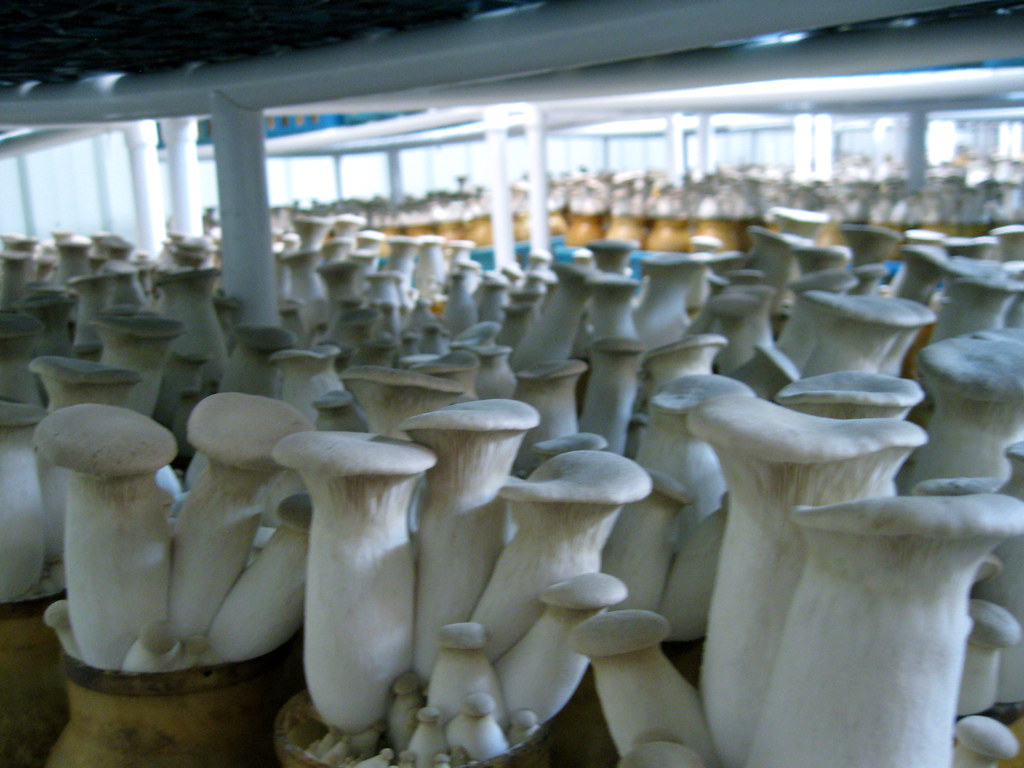
“Ali’i Oyster Mushrooms | On the tour of …” from www.flickr.com and used with no modifications.
Table of Contents
- High-Yield Strategies for Urban Farms
- Cost-Effective Methods
- Urban Farm Tour Highlights
- Sneak Peek Into Future Innovations
- Frequently Asked Questions (FAQ)
High-Yield Strategies for Urban Farms
When it comes to urban farming, maximizing your yield while minimizing space and costs is the name of the game. Oyster mushrooms are a fantastic crop that thrive in urban environments due to their adaptability and minimal space requirements. Let’s talk about the strategies that can help you boost your oyster mushroom production without breaking the bank.
Firstly, selecting the right strain of oyster mushrooms is crucial. Some varieties are more prolific than others, and choosing a high-yielding strain can make a significant difference in your harvest. Secondly, mastering the art of substrate preparation is key. The substrate is what your mushrooms will grow on, and getting this right can lead to a bountiful harvest.
Let’s not forget about the importance of proper hydration and ventilation. Mushrooms love moisture, but too much can lead to mold, while too little can dry them out. Striking that balance is essential. And of course, fresh air is important for healthy growth, but you don’t want to expose your mushrooms to harsh outdoor conditions. A controlled environment is your best friend here.
Cost-Effective Methods
Urban farming doesn’t have to be expensive. In fact, with a bit of creativity and resourcefulness, you can set up a highly productive oyster mushroom farm on a shoestring budget. Let’s look at some cost-effective methods that will keep your expenses low and your yields high.
One of the best ways to save money is to use recycled materials for your growing setup. You’d be surprised at how many everyday items can be repurposed for mushroom cultivation. Think cardboard, coffee grounds, and even toilet paper rolls. These can all serve as substrates or components of your growing environment.
Another tip is to make your own mushroom spawn. While it may sound daunting, creating your own spawn is not only more cost-effective but also allows for greater control over the quality of your mushrooms. With some patience and practice, you can become self-sufficient in your mushroom cultivation endeavors.
Urban Farm Tour Highlights
Ever wondered what a high-yield oyster mushroom farm looks like up close? Join us on a virtual tour of an urban mushroom farm that’s making waves in the community. From innovative growing techniques to space-saving designs, this tour is packed with inspiration for aspiring and seasoned urban farmers alike.
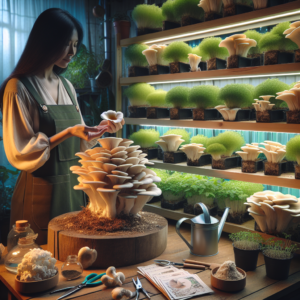
One of the standout features of this urban farm is its vertical farming setup. By growing mushrooms on shelves stacked high, the farm maximizes its use of vertical space, which is often underutilized in urban environments. This approach not only increases yield per square foot but also demonstrates how to effectively farm in limited spaces.
During the tour, you’ll also get to see how this urban farm manages its resources sustainably. Water recycling systems and solar panels are just a couple of examples of how modern farms are reducing their environmental footprint while maintaining high productivity.
Sneak Peek Into Future Innovations
The world of urban farming is evolving rapidly, and technology plays a huge role in this. As we look to the future, there are several exciting innovations on the horizon that could revolutionize how we cultivate oyster mushrooms and other crops in urban settings.
For instance, smart farming technologies are making it easier to monitor and control growing conditions, leading to more consistent and higher-quality yields. Imagine receiving alerts on your smartphone when your mushrooms need more water or when it’s time to adjust the temperature. These advancements are just around the corner.
Biotechnology is another area to watch. Scientists are working on developing mushroom strains that are more resistant to pests and diseases, which means less reliance on chemical interventions and a healthier product for consumers. Stay tuned for these groundbreaking developments in urban mushroom farming.
Frequently Asked Questions (FAQ)
Got questions about oyster mushroom cultivation in urban environments? You’re not alone. Here are some of the most commonly asked questions, along with clear, concise answers to help you on your mushroom farming journey.
Whether you’re curious about the best growing conditions, wondering how to get started, or looking for tips to increase your yield, we’ve got you covered. We understand that everyone’s situation is unique, so if you have a question that’s not addressed here, don’t hesitate to reach out for personalized advice.
Article-at-a-Glance
- Discover high-yield strategies for growing oyster mushrooms in urban farms.
- Learn how to choose the right substrate and ensure compatibility with your mycelium.
- Understand the importance of climate control for optimal mushroom growth.
- Identify and troubleshoot common issues that can affect mushroom cultivation.
- Get tips on harvesting your mushrooms at the right time to maximize yields.
Optimizing Oyster Mushroom Growth: High-Yield Strategies
High-yield oyster mushroom cultivation is within reach if you play your cards right. It’s all about optimizing your growing environment and understanding the unique needs of your fungal friends. Here, we’ll dive into the key strategies that can help you ramp up your production and get the most out of your urban farm.
Understanding Substrate and Mycelium Compatibility
Think of the substrate as the foundation of your mushroom farm. It’s what your oyster mushrooms will feed on, and getting it right is critical for success. The trick is to match your mycelium with a substrate that it loves. Common substrates include straw, sawdust, and agricultural byproducts. Each has its own benefits, and your choice will depend on factors like availability and the specific requirements of the mushroom strain you’re working with. Remember, a happy mycelium leads to a bountiful harvest!
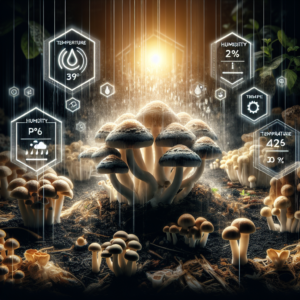
Climate Control: Managing Temperature and Humidity for Peak Production
Mushrooms are sensitive to their environment, and even small changes in temperature and humidity can affect their growth. Oyster mushrooms prefer a humid, cool environment, so maintaining these conditions is essential. Use fans, humidifiers, and temperature controls to create a stable environment. Monitoring your farm with simple tools like thermometers and hygrometers can prevent a lot of headaches and keep your mushrooms growing strong.
Troubleshooting Common Growth Issues
Even with the best-laid plans, you might encounter some hiccups along the way. Common issues include contamination, improper fruiting, and inconsistent moisture levels. The key is to act quickly and adjust your strategy. For example, if you spot mold or other signs of contamination, isolate the affected area immediately to prevent it from spreading. Keeping a close eye on your crops and maintaining strict hygiene practices can nip most problems in the bud.
Harvesting: Maximize Yields With Proper Timing and Techniques
Timing is everything when it comes to harvesting your oyster mushrooms. Harvest too early, and you’ll miss out on potential yield; too late, and you might find your mushrooms have become tough and less palatable. Look for signs that the edges of the caps are starting to turn upwards – that’s usually the sweet spot for harvesting. Use a sharp knife and a gentle hand to cut the mushrooms at the base, and you’ll encourage future flushes of growth, keeping your yield high throughout the season.
Slash Your Setup Costs: Proven Tips for Urban Mushroom Farmers
Starting an urban mushroom farm doesn’t have to drain your wallet. With a few smart choices and a do-it-yourself attitude, you can slash your setup costs significantly. Let’s explore some practical tips that will help you save money while still maintaining high-quality production.
DIY Cultivation Supplies: How to Save Without Sacrificing Quality
One of the biggest expenses in mushroom cultivation can be the equipment. But guess what? You can create a lot of it yourself. DIY cultivation supplies, like fruiting chambers and incubators, can be made with a few basic materials and tools. For example, a fruiting chamber can be as simple as a clear storage bin with some holes for ventilation. Not only does this save you money, but it also gives you the flexibility to customize your setup to your specific needs.
- Use clear storage bins as makeshift fruiting chambers.
- Convert a simple bookshelf into a space-efficient rack for growing trays.
- Repurpose household items like fans and humidifiers to regulate air flow and moisture.
- Build your own LED lighting setup with components from the hardware store.
- Create a homemade misting system with a spray bottle and a timer.
- Make your own mushroom spawn using spores or tissue cultures.
- Upcycle containers and jars for storing and sterilizing substrate.
Recycled Materials: Turning Waste into Fertile Grow Environments
Another excellent way to cut costs is by using recycled materials as your substrate. Many urban mushroom farmers have found success using coffee grounds, paper waste, and even spent brewery grains to grow their mushrooms. These materials are often free or very low cost, and they can be sourced from local businesses that would otherwise throw them away. Not only does this approach save you money, it also contributes to a more sustainable farming practice.
- Partner with local coffee shops for a steady supply of used coffee grounds.
- Collect cardboard and paper waste to use as a carbon-rich substrate component.
- Reach out to breweries for spent grains, a nutrient-dense growing medium.
- Use agricultural byproducts like straw or wood chips, which are often inexpensive or free.
- Implement composting to create rich organic substrate from kitchen and garden waste.
Budgeting for Your Urban Farm: Where to Invest and Cut Costs
Effective budgeting is key to running a successful urban farm. Focus your spending on areas that will give you the best return on investment, like high-quality spawn and reliable climate control systems. On the flip side, cut costs in areas where you can afford to be more frugal, like using second-hand equipment or building your own growing structures. Always keep an eye out for grants and funding opportunities designed to support urban agriculture initiatives.
- Invest in high-quality spawn, as it’s the foundation of your mushroom production.
- Save on growing containers by using repurposed items or buying second-hand.
- Consider energy-efficient climate control systems to reduce long-term costs.
- Look for local agriculture grants or community funding to support your farm.
- Keep detailed records of expenses and yields to identify cost-saving opportunities.
- Explore bartering with other urban farmers to exchange supplies and knowledge.
Exclusive Urban Farm Tour: Efficient, High-Yield Designs in Action
Ready for a behind-the-scenes look at a thriving urban mushroom farm? Our exclusive farm tour showcases the clever designs and techniques that make high-yield production possible in the heart of the city. From innovative space-saving setups to ingenious recycling programs, this tour is a treasure trove of ideas for urban farmers everywhere.
Micro-Farming in Tight Spaces: Innovative Approaches to Urban Agriculture
Space is often the biggest challenge in urban farming, but with a little creativity, it doesn’t have to be a limiting factor. On our urban farm tour, you’ll witness how micro-farming techniques are transforming small areas into productive mushroom havens. Vertical farming, multi-tiered shelving, and hanging bags are just a few of the space-saving solutions you’ll see in action. These approaches not only maximize yield in tight spaces but also demonstrate the potential for urban farms to flourish in any city environment.
- Discover how vertical farming stacks production and skyrockets yield.
- See multi-tiered shelving units that turn a small footprint into a mushroom jungle.
- Learn about the use of hanging bags to utilize overhead space effectively.
- Witness how urban farmers are using rooftops and balconies for mushroom cultivation.
- Get inspired by container gardens that double as both grow areas and aesthetic features.
- Understand how to work with natural light patterns or supplement with energy-efficient LED lighting.
- Observe the integration of smart technology to monitor and manage growing conditions remotely.
Success Stories: Meet the Urban Farmers Leading the Way
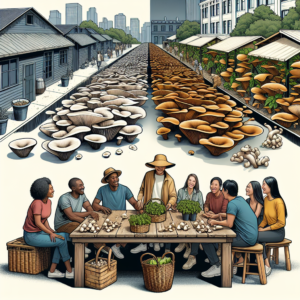
Meet the trailblazers of urban mushroom farming who have turned small spaces into productive oases. These urban farmers have not only succeeded in growing high-yield oyster mushrooms but also in inspiring a community of growers. Their stories are a testament to what can be achieved with innovation, dedication, and a bit of ingenuity.
- Emma, who transformed her rooftop into a lush mushroom garden, now supplies fresh produce to local restaurants.
- Jake, a former tech worker, who applied his skills to automate his mushroom farm, increasing efficiency and yield.
- Lina and Raj, a dynamic duo who started a community farm, teaching others how to grow and cook oyster mushrooms.
- Carlos, who uses recycled materials exclusively, proving that sustainability and profitability can go hand in hand.
- Sophie, who pioneered a unique aquaponic system that pairs fish farming with mushroom cultivation.
These individuals are not just growing mushrooms; they’re cultivating change, demonstrating that urban farming is a viable and sustainable path to food security and community resilience.
Interactive Demonstrations: See the Mushroom Cultivation Process Firsthand
There’s nothing quite like seeing the magic of mushroom cultivation up close. Our interactive demonstrations provide an immersive experience that takes you through each step of the process. From substrate preparation to harvest, you’ll get hands-on experience and expert guidance.
- Watch as a seasoned grower mixes and pasteurizes substrate right before your eyes.
- Learn to inoculate bags with spawn and understand the importance of aseptic technique.
- Feel the thrill of seeing mycelium colonize the substrate in a controlled environment.
- Participate in a harvest, learning the gentle technique required to pick mushrooms without damaging the mycelium.
- Ask questions and get immediate answers from knowledgeable farmers.
These demonstrations are more than just educational; they’re a chance to connect with other mushroom enthusiasts and share in the joy of growing.
A Sneak Peek: Tomorrow’s Mushroom Farming Technologies Today
The future is bright for urban mushroom farming, with new technologies emerging that promise to make the process more efficient, sustainable, and accessible. Here’s a sneak peek at what’s on the horizon, from cutting-edge cultivation techniques to the latest equipment.
Up-and-Coming Techniques in Mushroom Cultivation
Innovation in mushroom cultivation is happening at a rapid pace. We’re seeing new techniques that not only increase yields but also reduce environmental impact. Here are some of the most promising developments:
- Genetic editing tools like CRISPR are being explored to enhance mushroom traits, such as growth rate and nutritional value.
- Permaculture principles are being applied to create self-sustaining mushroom ecosystems that require minimal intervention.
- Advances in mycoremediation are harnessing mushrooms’ ability to clean up environmental contaminants, turning waste into wealth.
- Novel growing mediums, such as urban waste streams, are being tested to find new, sustainable substrates for mushroom cultivation.
These techniques are not just about pushing the boundaries of what’s possible; they’re about creating a more resilient food system for the future.
State-of-the-Art Equipment Preview: What’s Next for Mushroom Farmers
The tools of the trade are evolving, with new equipment making mushroom farming more precise and less labor-intensive. Here’s a preview of the state-of-the-art equipment that’s set to change the game:
- Automated climate control systems that fine-tune growing conditions to the needs of specific mushroom strains.
- Smart monitoring devices that track growth parameters and alert farmers to changes in the environment.
- LED lighting solutions that mimic natural light cycles and promote healthy mushroom development.
- Robotics and AI-driven systems that handle repetitive tasks, from mixing substrates to harvesting crops.
With these tools, urban mushroom farmers can look forward to more predictable yields and a smoother farming experience.
Sustainable Farming: Advances in Eco-Friendly Mushroom Production
As the world becomes more conscious of its environmental footprint, mushroom farming is leading the way in sustainable practices. Here are some of the advances that are making mushroom production greener:
- Closed-loop systems that recycle water and nutrients, reducing waste and conserving resources.
- Biodegradable packaging options for mushroom products, cutting down on plastic use.
- Integration of renewable energy sources, like solar and wind power, to run mushroom farms with a smaller carbon footprint.
- Collaboration with local businesses to repurpose waste as mushroom substrate, promoting a circular economy.
These sustainable practices not only benefit the environment but also help farmers save money and appeal to eco-conscious consumers.
Frequently Asked Questions (FAQ)
What Are Oyster Mushrooms and Why Are They Ideal for Urban Farming?
Oyster mushrooms are a type of edible fungi known for their distinctive oyster-shaped cap and woodsy flavor. They’re incredibly versatile, thriving on a variety of substrates, and require minimal space to grow, making them perfect for urban farming. Their rapid growth cycle and the ability to grow in stacked layers or vertical installations mean high yields from a small footprint – essential in city environments where space is at a premium.
What Are Some Common Mistakes in Mushroom Cultivation and How to Avoid Them?
One common mistake is improper substrate preparation, which can lead to poor mushroom development or contamination. Always pasteurize or sterilize your substrate correctly. Another issue is incorrect humidity and temperature levels; invest in a good hygrometer and thermometer to monitor your environment closely. Overcrowding can also be a problem, so give your mushrooms plenty of space to breathe and grow. Lastly, neglecting hygiene can lead to contamination, so maintain a clean growing area and practice good sanitation.
Can I Start an Oyster Mushroom Farm in a Small Urban Space?
Absolutely! Oyster mushrooms are one of the most space-efficient crops you can grow. With vertical farming techniques and the ability to utilize unconventional spaces like closets or shelves, you can start a mushroom farm in areas as small as a corner of a room. The key is to optimize your space with smart design and efficient use of vertical space.
How Long Does It Take for Oyster Mushrooms to Grow?
Oyster mushrooms are known for their quick growth cycle. From inoculation to harvest, it typically takes about 3 to 6 weeks depending on the growing conditions and the strain of mushroom. This short cycle allows for multiple harvests within a single season, which is great for continuous production and profitability.
In conclusion, starting a low-cost, high-yield oyster mushroom farm in an urban setting is not only possible but also a sustainable and profitable venture. With the right strategies, a bit of creativity, and a willingness to learn, you can transform even the smallest of spaces into a thriving urban farm. From selecting the right substrates and strains to optimizing your growing conditions and space, the world of urban mushroom farming is ripe with opportunity. And with the help of technology and innovative farming techniques, the future of urban agriculture looks brighter than ever. So why not start your urban mushroom farming journey today and join the movement towards a more sustainable and food-secure tomorrow?