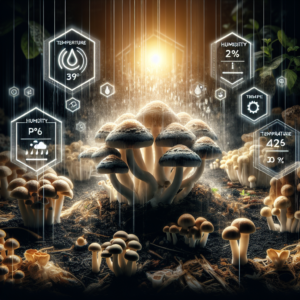
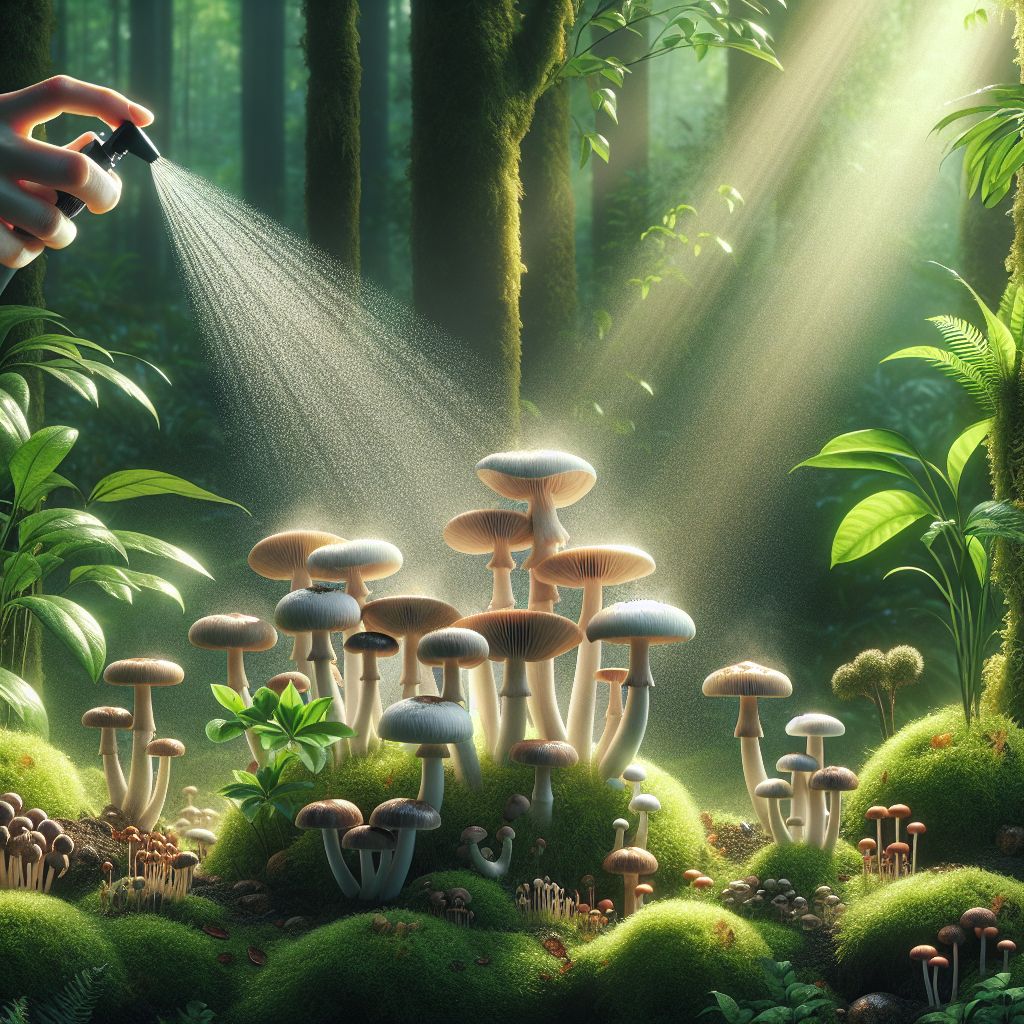
When it comes to nurturing mushrooms, understanding their hydration needs is just as crucial as finding the perfect spot in your garden. It’s a delicate balance, but once you get the hang of it, you’ll be well on your way to a flourishing mushroom patch. Let’s dive into the essentials of mushroom watering and explore the benefits of using a plant mister to achieve optimal moisture levels.
Key Takeaways
- Mushrooms thrive in moist environments, and proper hydration is key to successful growth.
- A plant mister can provide a gentle, even distribution of water, mimicking the natural dew found in mushrooms’ native habitats.
- Establishing a consistent misting schedule is crucial for maintaining the ideal humidity levels for your mushrooms.
- Choosing the right type of water, such as filtered or rainwater, can prevent harmful chemicals from affecting your mushrooms.
- Monitoring and adjusting your watering technique can help overcome common challenges such as overwatering or insufficient humidity.
Delving Deeper Into Mushroom Hydration: The Essential Guide
Why is proper hydration so important for mushrooms? Well, these unique organisms are not like your typical garden plants. They don’t have roots that suck up water from the soil. Instead, mushrooms absorb moisture directly from their surroundings. This means that the environment needs to be consistently damp to support their growth. Think of it like a sponge that needs to be kept moist to stay pliable and functional.
Why Proper Hydration is Key to Mushroom Growth
- Mushrooms lack a traditional root system and rely on their environment for moisture.
- Consistent moisture levels help in the development of healthy mycelium, which is the vegetative part of a fungus.
- Hydration impacts not just the growth, but also the flavor and texture of the mushrooms.
So, how do we ensure that our mushrooms get just the right amount of water? It’s not as simple as sticking to a watering schedule for your houseplants. Mushrooms need a high-humidity environment, and that’s where a plant mister comes in handy. A fine mist provides moisture without soaking the substrate, which can lead to mold and bacterial growth.
Understanding Your Mushrooms’ Unique Watering Needs
Each mushroom variety may have its own preferences when it comes to humidity and moisture. For instance, shiitake mushrooms require a higher humidity level than oyster mushrooms. Understanding the specific needs of your mushrooms will help you tailor your watering routine to provide the best care possible. Here’s a simple approach:
Firstly, do a little research on the mushrooms you’re growing. What are their natural habitats like? This will give you a clue about the humidity and moisture levels they’ll thrive in. Then, observe your mushrooms regularly. Are they looking dry or shriveled? This might be a sign that they need a bit more water. On the other hand, if you notice water pooling or a strong musty smell, you might be overdoing it.
Unlocking the Benefits of Plant Misters for Mushrooms
Using a plant mister isn’t just about giving your mushrooms a drink. It’s about creating a microclimate that keeps the air around them moist. This mimics the conditions they would find in nature, like a misty morning in a dense forest. The benefits of this approach are numerous:
Ensuring Even Moisture Distribution
With a plant mister, you can ensure that every part of your mushroom colony gets an even share of the water. This is vital because uneven watering can lead to some mushrooms growing large and healthy while others languish. A simple misting can make all the difference.
And here’s a tip: when you mist, aim for the air around the mushrooms rather than directly at them. This allows the moisture to settle gently, just like dew, and doesn’t disturb the delicate mycelium that’s hard at work beneath the surface.
The Impact of Fine Mist on Delicate Mycelium
- A fine mist prevents the substrate from becoming too wet, which can cause rot and disease.
- The gentle nature of misting protects the mycelium from being damaged by heavy water droplets.
- Misting can also help to keep the air around the mushrooms clean, reducing the risk of contamination.
Remember, your mushrooms are not just growing; they’re breathing. They need fresh, clean air as much as they need water. By misting, you’re not only hydrating them but also helping to maintain the air quality they need to thrive.
Now that you understand why proper hydration is crucial and how a plant mister can help, it’s time to get into the nitty-gritty of setting up a misting schedule that works for you and your mushrooms. Stay tuned for the next part of our guide, where we’ll delve into how often to mist, the best types of water to use, and how to troubleshoot common watering challenges. Your mushrooms will thank you for it!
Best Times of Day for Mushroom Watering
Timing is everything, especially when it comes to watering mushrooms. The best times to mist your mushrooms are early in the morning and late in the afternoon. These times mimic the natural cycles of dew, ensuring that your mushrooms absorb moisture in a way that’s in sync with their natural rhythm. Plus, it reduces the risk of evaporation that can occur during the hotter parts of the day.
It’s also smart to observe the life cycle of your mushrooms. Younger mushrooms might need a bit more attention with more frequent misting, as they’re still establishing themselves. As they mature, you can adjust your schedule accordingly. Just keep a close eye on them, and they’ll let you know what they need.
Choosing the Right Water for Your Fungi Friends
Water quality can’t be overlooked when you’re aiming to grow healthy, bountiful mushrooms. It’s not just about how much you water, but what you water with. Let’s explore the best options for your fungi friends.
Filtered vs. Tap Water: What’s Best for Your Batch?
While tap water is convenient, it may not always be the best choice for your mushrooms. It often contains chlorine and other chemicals that can be harsh on the sensitive mycelium. Filtered water, on the other hand, is free from these contaminants and is a gentler option for your mushrooms. If you have access to rainwater, that’s even better! Rainwater is naturally soft and devoid of the chemicals found in municipal water supplies.
Here’s a quick comparison to help you decide:
| Water Type | Pros | Cons |
|---|---|---|
| Tap Water | Convenient and readily available | May contain chlorine and other chemicals |
| Filtered Water | Free from most contaminants | Requires a filtration system |
| Rainwater | Soft and chemical-free | Dependent on weather and collection methods |
The Role of Water Temperature in Mushroom Health
Water temperature is another factor that can affect your mushrooms. Cold water can shock the mycelium, while water that’s too warm can accelerate bacterial growth. The sweet spot for water temperature is room temperature – around 60-70°F (15-21°C). This range is close to the natural temperature of rainwater and provides a comfortable environment for mushrooms to absorb moisture without stress.
Troubleshooting Common Mushroom Watering Challenges
Even with the best intentions, you might encounter some challenges in your mushroom watering adventures. Let’s troubleshoot a few common issues.
Identifying and Resolving Overwatering Issues
Overwatering can be just as detrimental as underwatering. Signs of overwatering include a heavy, waterlogged substrate, standing water, or a sour smell. If you encounter these issues, reduce your misting frequency and make sure your setup has proper drainage. It’s also a good idea to increase air circulation around your mushrooms to help the excess moisture evaporate.
Remember, mushrooms love moisture, but they need to breathe too. If the air around them is too saturated, it can lead to problems. Adjust your watering to find a balance that keeps the air fresh and the mushrooms happy.
Dealing with Insufficient Humidity Levels
On the flip side, if your mushrooms are drying out, you’ll need to increase the humidity. You can do this by misting more frequently or by setting up a humidity tent with some clear plastic sheeting. This creates a microclimate that holds in moisture, keeping your mushrooms snug and hydrated.
Another trick is to place a tray of water near your growing area. As the water evaporates, it will add moisture to the air. Just make sure not to let the water get stagnant, as this can become a breeding ground for bacteria.
Advanced Moisture Techniques for the Avid Grower
If you’re really serious about mushroom cultivation, there are advanced techniques that can take your hydration game to the next level. Let’s delve into how you can integrate humidity control systems and use hygrometers for precision watering.
Large-scale cultivations often benefit from automated humidity control systems. These systems can include humidifiers, hygrostats, and even misting systems that kick in when the air gets too dry. While these might be an investment, they pay off by providing a consistent environment that can lead to larger yields and healthier mushrooms.
Hygrometers are another tool that should be in every mushroom grower’s toolkit. These devices measure the humidity level in the air, allowing you to adjust your misting schedule based on precise readings. It’s all about giving your mushrooms the exact conditions they need to thrive.
Remember, growing mushrooms is both an art and a science. With patience, observation, and a little bit of experimentation, you’ll find the perfect moisture balance for your mushroom garden. And the reward? Delicious, homegrown mushrooms that are as fun to grow as they are to eat. Happy growing!
Integrating Humidity Control Systems for Large Cultivations
For those who are scaling up their mushroom cultivation, integrating humidity control systems can be a game-changer. These systems automate the process of maintaining the right moisture levels, which is especially helpful in large operations where manual misting is impractical. Systems can range from simple humidifiers to sophisticated setups that include sensors and timers to regulate humidity precisely. This not only ensures consistent mushroom quality but also saves time and labor.
The Use of Hygrometers for Precision Watering
Hygrometers are indispensable tools for mushroom growers. By providing real-time data on the humidity levels within your growing environment, they allow you to make informed decisions about when to water. This precision tool helps avoid the pitfalls of over or under-watering, leading to a more successful crop. A digital hygrometer can be particularly user-friendly, offering clear readings and, in some cases, the ability to set alarms when humidity levels fall outside the desired range.
FAQs
If you’re new to mushroom cultivation or looking to refine your techniques, you probably have questions. Here are some frequently asked questions about mushroom watering, with clear and concise answers to help you on your way.
Understanding the intricacies of mushroom hydration can be the difference between a thriving crop and a disappointing yield. Let’s clear up some common queries to help you achieve your best mushroom harvest yet.
Can You Overwater Mushrooms Using a Plant Mister?
Yes, it is possible to overwater mushrooms even with a plant mister. The key is to create a humid environment, not a wet one. If you notice pooling water or a consistent wet substrate, you’re likely misting too much. Cut back on the frequency or volume of misting, and allow the growing area to dry out slightly between applications. Remember, mushrooms need moisture, but they also require adequate air exchange to prevent the growth of bacteria and mold.
Is Distilled Water Necessary for Mushroom Cultivation?
While distilled water is not necessary for mushroom cultivation, it is often recommended because it is free from chlorine, minerals, and other impurities that can be found in tap water. These impurities can potentially harm the delicate mycelium or alter the pH of the substrate. However, if distilled water is not available, rainwater or filtered water can also be excellent alternatives for providing your mushrooms with clean hydration.
How Can You Tell if Your Mushrooms are Properly Hydrated?
You can tell if your mushrooms are properly hydrated by observing their appearance and the environment they’re growing in. Healthy, hydrated mushrooms are plump and firm, with a smooth surface. The substrate should be moist to the touch, but not waterlogged. If the mushrooms look wrinkled or the edges of the caps are turning upwards, it may indicate a need for more humidity or misting.
Conversely, if you see standing water, a slimy mushroom surface, or a sour smell, these could be signs of overwatering. Adjust your watering practices accordingly to maintain the right balance of moisture.
What Are the Risks of Using Cold Water for Misting?
Using cold water for misting can shock the mycelium, potentially stunting mushroom growth or even killing the mycelium. Cold water can also create an unfavorable environment that promotes the growth of unwanted bacteria and molds. It’s best to use water at room temperature to mimic the natural conditions under which mushrooms thrive.
Besides that, sudden temperature changes can cause condensation and water droplets to form on the mushrooms themselves, which is not ideal. You want a fine mist that provides humidity without directly wetting the mushrooms.
How Do Humidity Needs Differ Among Mushroom Varieties?
Just like plants, different mushroom varieties have different humidity needs. For example:
- Shiitake mushrooms prefer a humidity level of around 85-95%.
- Oyster mushrooms are more versatile but do well in humidity levels of 80-90%.
- Button mushrooms require slightly lower humidity levels of 70-80%.
It’s important to research the specific humidity requirements of the mushrooms you’re growing. This information will guide you in setting up the right environment, whether it’s adjusting your misting schedule or using a humidity tent or other control systems.
Remember, successful mushroom cultivation is all about creating and maintaining the right environment. With the proper knowledge and tools, you can provide the ideal moisture conditions for your mushrooms to thrive. So, grab that plant mister, monitor your humidity levels, and get ready to grow some fantastic fungi!